
Logistics Optimization in Mexico’s Manufacturing Sector
Updated: May 20
Logistics optimization has become a critical factor for the manufacturing industry in Mexico. Logistics is the backbone that connects production with delivery, and it is estimated that up to 50% of a product’s total cost corresponds to logistics activities. Given that Mexican manufacturing contributed nearly 15% of national GDP in 2022 (and 22% of formal employment), improving logistics efficiency in this sector is vital for economic competitiveness.
In this article, we explore what logistics optimization is and why it is so important in manufacturing. We also analyze the main logistics challenges in Mexico, the key technologies (automation, ERP/WMS software, IoT, artificial intelligence), and the strategies used to increase efficiency in warehousing and distribution. Finally, we highlight the economic and operational benefits of optimized logistics, with relevant examples applicable to Mexican companies, all focused on the local context and organic Google search visibility.
What Is Logistics Optimization?
Logistics optimization in manufacturing encompasses the efficient planning, execution, and control of the flow of materials, inputs, and finished products throughout the supply chain. Its purpose is to ensure that each component arrives at the right time, in the right quantity, and in optimal condition, maintaining continuity in the production process.
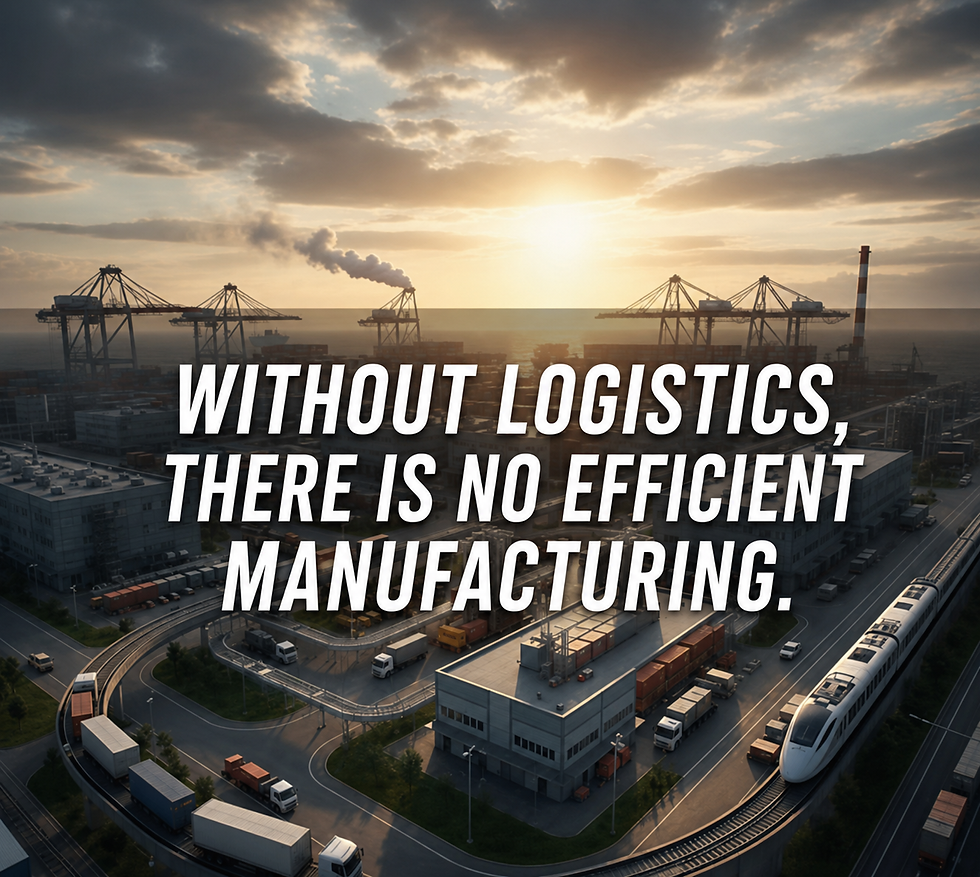
In other words, it comprehensively coordinates raw material procurement, inventory management, transportation, and distribution, preventing disruptions, minimizing costs, and meeting end-customer demand. A concise definition captures it well: “without logistics, there is no efficient manufacturing.” This means that optimizing logistics involves eliminating inefficiencies at every link in the chain, ensuring that production does not stop due to a lack of inputs and that finished products reach the market on time.
Importance of Logistics Optimization in Manufacturing
Manufacturing relies heavily on precise synchronization between production processes and distribution. A delay in the delivery of raw materials or in shipping finished goods can generate millions in losses and damage a company’s reputation. In fact, logistics represents a substantial share of operating costs: in Mexico, ground transportation alone accounts for up to 40% of total logistics costs for many manufacturing companies, and at the finished-product level, logistics can represent nearly half of the total cost. These figures clearly show that any improvement in logistics efficiency has a direct and significant impact on profitability.

In addition, optimized logistics is key to capitalizing on strategic opportunities. Mexico’s manufacturing industry is an economic pillar (15% of GDP) and competes in both the domestic market and exports. In the era of nearshoring, an agile and reliable supply chain allows companies to leverage Mexico’s geographic location to supply North American markets quickly, reducing delivery times from weeks to days. The adoption of nearshoring strategies—bringing suppliers and production closer to the end customer—is improving distribution performance. As a result, well-optimized logistics translate into a competitive advantage: lower costs, shorter delivery cycles, and improved service levels—essential qualities for Mexican manufacturers serving national and international customers.
Main Logistics Challenges in the Manufacturing Sector
Despite its importance, logistics in manufacturing faces multiple challenges, especially in the Mexican context. Among the main logistics challenges are:
High costs and limited infrastructure
Mexico faces high logistics costs—equivalent to up to 12% of GDP, compared to ~8% in the United States—due to structural deficiencies (deteriorated highways, security issues) and supply chain inefficiencies. These limitations have caused Mexico to fall from 50th place (2014) to 66th (2022) in the global Logistics Performance Index. Insufficient and congested infrastructure increases transport times and costs, reducing business competitiveness.
Insecurity and transportation delays
Insecurity on freight routes and road blockades are serious problems that generate multibillion-peso losses. In 2024, the trucking industry recorded losses close to 70 billion pesos due to theft and violence, with an average of 50 trucks stolen daily on Mexican highways. These incidents, combined with protests that block roads, cause frequent delays and logistics overruns, disrupting supply chains and discouraging transport operators.
Just-in-Time (JIT) delivery and inventory management
Modern manufacturing—particularly in sectors such as automotive and electronics—operates under Just-in-Time schemes, where parts and inputs must arrive exactly when needed. Any delay in raw material deliveries can halt entire production lines. At the same time, optimizing inventory levels is a constant challenge: excess inventory leads to unnecessary storage costs, while shortages of critical stock stop production. Poor inventory management can result in overruns, obsolescence, and stockouts. Finding the right balance is complex, especially amid demand fluctuations.
Transportation and warehousing cost control
Keeping shipping and storage expenses under control without sacrificing service quality is another challenge. Fuel prices, tolls, vehicle maintenance, and other factors make transportation—especially road transport—increasingly expensive. Likewise, storage costs (warehouse rent, labor, energy) can rise significantly if inventory cycles are not agile. Companies must pursue continuous efficiencies through better routing, load consolidation, and warehouse management practices to prevent logistics costs from spiraling.
International trade complexity
Many manufacturers in Mexico depend on imported inputs or export finished goods, integrating into global supply chains. This involves navigating customs procedures, international regulations, and complex documentation requirements. Any error or delay at customs can severely impact logistics performance. Increased trade under the USMCA (T-MEC) raises transit volumes but also demands logistics systems capable of meeting compliance requirements and avoiding border bottlenecks.
Lack of technological integration
In many organizations, manual processes or siloed information systems persist, hindering logistics coordination. The lack of integrated systems across production, warehousing, and transportation leads to communication gaps and limited visibility of information flows. While global trends point toward end-to-end digitalization, only about 35% of Mexican companies have completed their digital transformation, compared with 45% globally. This lag—driven by high upfront investment costs and resistance to change—must be overcome to compete with more advanced supply chains.
Flexibility and logistics customization
Consumers increasingly demand customized products and smaller production batches. Consequently, logistics chains must be highly flexible to adapt quickly to demand changes and manage diverse order configurations. Efficiently handling urgent or special orders (including make-to-order and lot size one) requires agile logistics processes. This adaptability is challenging, as logistics was traditionally designed for large, standardized volumes. Today, companies must adjust operations in real time without losing efficiency or incurring excessive costs.
Talent shortages and variable costs
There is also a shortage of specialized logistics talent (planners, technology operators, data analysts), complicating improvement initiatives. Additionally, volatility in input costs such as fuel and energy adds pressure to operations. Companies must train and retain qualified personnel while managing external cost fluctuations that affect logistics performance.
In summary, logistics challenges in Mexico’s manufacturing industry are significant—from structural issues (infrastructure, security) to internal operational challenges (JIT, inventory, digitalization). However, each challenge also represents an opportunity for improvement through the application of appropriate strategies and technologies, as discussed below.
Technologies Applied to Logistics Optimization
Technological modernization is a cornerstone for overcoming many of these challenges. In Logistics 4.0, companies adopt automation, intelligent systems, and connectivity to make operations more agile and precise. Below are the main technologies applied to logistics optimization in manufacturing:
Warehouse and process automation
Automation refers to the use of machinery and computer-controlled systems to perform logistics tasks autonomously or semi-autonomously.

In modern manufacturing warehouses, this includes robots and automated guided vehicles (AGVs) for internal material transport, as well as automated storage and retrieval systems (AS/RS) to manage inventories. These solutions help streamline operations that were previously manual. For example, AGVs can move materials within the plant, ensuring they arrive at the production line exactly when needed, while automated storage systems guarantee the availability of inputs at the precise moment, eliminating unnecessary waiting times. By reducing human intervention in repetitive tasks, errors are also minimized, and operations can run 24/7 with high consistency.
The adoption of automation is on the rise. In Latin America, the industrial automation market is projected to reach USD 24.71 billion by 2028, with an annual growth rate of approximately 7.5%. This growth reflects increased investment in robotics, automated control, and other technologies that are transforming logistics processes. One immediate benefit of automation is error reduction: for example, voice-picking systems (voice-guided instructions for order picking) have been shown to reduce human errors in picking and packing while also speeding up these tasks. Faster decision-making is also achieved thanks to access to real-time data and process standardization. In short, automation turns logistics into a more proactive, agile, and precise process, where technology handles heavy and repetitive work, allowing human talent to focus on strategic and supervisory tasks.
Management software (ERP and WMS)
The integration of management software is essential for optimizing logistics in manufacturing. Tools such as ERP (Enterprise Resource Planning) and WMS (Warehouse Management System) platforms make it possible to coordinate and visualize all logistics processes on a single platform, from production planning to final delivery. An ERP integrated with a WMS allows information to flow seamlessly: production orders trigger material requisitions to the warehouse, inventory systems update stock levels in real time, and customer orders are automatically linked to shipping and invoicing.
In practice, warehouse management systems (WMS) help optimize the layout and movement of goods within warehouses. They offer functionalities such as real-time inventory control, location management (slotting) to place high-rotation products in accessible positions, and generation of optimal picking routes. This provides full visibility of the logistics chain, with traceability of each input or batch from receipt through use or dispatch. When all departments work with the same up-to-date information, many coordination problems are avoided. Conversely, the lack of integrated systems can cause communication gaps and information flow errors (for example, production not being informed in time of a purchasing delay, or the warehouse being unaware of dispatch priorities).
For this reason, digitizing logistics with ERP/WMS systems is a key investment. These platforms enable data-driven decision-making: if sales increase, the system suggests reordering supplies; if a certain product moves slowly, it becomes visible for production adjustments; if there is a bottleneck in the warehouse, it is detected through performance metrics. In summary, integrated software acts as the digital brain of logistics, efficiently coordinating purchasing, production, inventory, and distribution, while providing the traceability needed to optimize every link in the chain.
Internet of Things (IoT) and sensors
The Internet of Things (IoT) consists of equipping physical objects (vehicles, containers, shelving, machines) with sensors and internet-connected devices to collect and transmit data in real time. Applied to logistics, IoT delivers a level of granular visibility and control that was previously unthinkable. For example, warehouses use smart tags (RFID) and sensors on pallets or racks that automatically report entries, exits, and locations of each product, enabling highly accurate perpetual inventory. In transportation, trucks can be equipped with GPS and telematics sensors that transmit their location, speed, and conditions (cargo temperature, vibrations, door openings) in real time to a control center.
Implementing IoT means knowing exactly where each shipment is and in what condition it is. This enhanced traceability enables faster anticipation and response: if a critical shipment is delayed on the road, IoT systems can automatically issue alerts and even suggest alternative routes. If a refrigerated container begins to lose temperature, an IoT sensor can notify operators so preventive actions can be taken. IoT technologies are redefining efficiency, transparency, and traceability standards in logistics by providing real-time data to optimize decision-making. In addition, the massive volume of data collected (Big Data) lays the foundation for applying advanced analytics and artificial intelligence to operations. In essence, IoT acts as the digital eyes and ears of the supply chain, providing end-to-end visibility and enabling smarter, more reactive logistics.
Artificial Intelligence (AI) and advanced analytics
Artificial intelligence (AI) has become a key ally in taking logistics optimization to the next level. Through machine learning algorithms, AI can analyze patterns and large volumes of logistics data to make optimal decisions or predict future events. In manufacturing, this translates into applications such as more accurate demand forecasting (avoiding overstock or shortages), route optimization considering traffic and constraints, intelligent scheduling of production and transportation, and predictive maintenance of equipment (anticipating failures in forklifts, vehicles, or machinery to avoid unexpected downtime).
Currently, many companies are already experiencing the benefits of AI in logistics. For example, AI-based tools are used to optimize product placement in warehouses, forecast space requirements, and anticipate seasonal demand peaks. This means an AI system can recommend how to better arrange inventory within a warehouse to reduce travel times, or alert in advance to a potential increase in demand for a specific product (based on historical trends and market variables), allowing the company to prepare with additional stock or transport capacity.
AI also improves real-time decision-making. According to a 2024 industrial survey, 91% of manufacturing leaders identified new AI use cases, highlighting benefits such as process automation (64%) and instant decision-making (59%) enabled by these tools. In addition, 45% reported that AI increased job satisfaction by taking over repetitive manual tasks, freeing people to focus on higher value-added work. This reflects an important point: AI is not here to replace human talent, but to enhance it, handling tedious and complex tasks so professionals can focus on strategy and problem-solving.
Concrete AI applications in logistics also include computer vision systems for quality control and rapid inventory counting, chatbots and virtual assistants that optimize communication across the chain (for example, automatically handling order status inquiries), and predictive risk models that help manage uncertainty (weather, customs delays, cost changes). Overall, AI pushes logistics optimization beyond basic automation into a domain where failures can be anticipated, risks managed, and resources optimally allocated before problems occur. Mexican companies that adopt these AI technologies in logistics will be better prepared to respond with agility and maintain operational resilience in changing environments.
Strategies to improve efficiency in warehouses and distribution
Alongside technology, implementing sound logistics practices and strategies is essential to improve efficiency in warehousing and distribution. Below are key strategies that logistics managers in the manufacturing sector can apply to optimize their operations:
End-to-end supply chain visibility: Increase traceability and end-to-end visibility of all inventory and order movements. This involves using systems that monitor the real-time location of raw materials, work-in-progress, and final deliveries. Full visibility allows companies to anticipate issues, respond quickly to delays or incidents, and prevent waste across the chain. For example, if a shipment is identified as unexpectedly stopped, the customer can be notified and production adjusted while waiting, instead of being caught by surprise. Visibility also enables better informed decision-making at every level, based on accurate logistics flow data.
Efficient inventory management: Optimize inventory levels by implementing Just-in-Time (JIT) methodologies and real-time control systems. Efficient inventory management aims to have the right quantity at the right time, avoiding both shortages and excess. To achieve this, it is recommended to classify supplies by criticality (A/B/C), calculate appropriate safety stocks, and rely on real-time inventory systems (such as a WMS) that trigger minimum-level alerts. Good inventory management prevents production stoppages due to lack of materials while also reducing storage costs from overstock. For example, an MRP (Material Requirements Planning) module can synchronize supply orders with the production schedule, achieving a more balanced flow.
Distribution route optimization: Analyze transportation and delivery routes to reduce travel time and costs. This includes using load consolidation techniques (combining shipments to nearby destinations in a single vehicle) and designing efficient routes that minimize empty mileage. Route planning supported by TMS (Transportation Management System) platforms or mapping tools can identify optimal delivery sequences. Consolidating and planning routes holistically helps cut fuel costs and driving hours while improving on-time performance. It is also useful to negotiate flexible delivery windows with customers to better adjust routes and maximize truck utilization, avoiding underused trips.
Strategic and fluid warehousing: Optimize warehouse design and operations to achieve agile inbound and outbound flows. Actions include implementing efficient layouts (for example, placing high-rotation products near shipping areas), applying cross-docking where possible (transferring inbound goods directly to outbound without prolonged storage), and using visual management techniques (5S) to maintain order. Investing in warehouse automation tools also adds efficiency: internal transport systems (conveyors, AGVs) or automated sorting systems speed up order preparation and reduce errors. A strategically organized warehouse reduces cycle times (from order receipt to dispatch) and maximizes space utilization, preventing bottlenecks during peak seasons.
Phased technology adoption: Introduce new technologies gradually and in a planned manner within logistics operations. Digital transformation does not happen overnight; it is advisable to identify critical areas where technology can deliver immediate value (for example, installing RFID readers at material receiving, or a routing system for the fleet) and then expand its scope. Training staff is crucial to overcome resistance to change and ensure proper tool usage. Studies indicate that progressive technology adoption can increase industrial productivity by up to 25% by eliminating inefficiencies and optimizing processes. Therefore, investing in technology (WMS, IoT, data analytics, etc.) should be seen as an ongoing strategy: start with basic modules, measure benefits, and then scale to more advanced solutions as the organization becomes ready.
Flexibility and holistic planning: Integrate production planning with logistics in a comprehensive manner while maintaining flexibility for adjustments. Developing master plans that cover everything from procurement to final delivery helps synchronize all links. Implementing Sales & Operations Planning (S&OP) meetings where sales, production, and logistics align on a single feasible plan is highly beneficial. In addition, contingency plans should be in place: identified alternative suppliers, predefined secondary routes, extra capacity contracted for demand peaks, etc. Flexibility means being able to react quickly to unexpected changes—for example, if a customer doubles an order or a foreign supplier faces delays, the supply chain must adjust without falling into chaos. Holistically planned logistics with built-in adaptability better absorb environmental fluctuations while maintaining stable operations.
Collaboration with partners and nearshoring: Foster close collaboration with suppliers, carriers, and other supply chain partners. Sharing information (such as demand forecasts with suppliers) and coordinating schedules can eliminate inter-company inefficiencies. In Mexico, leveraging nearshoring strategies—sourcing from local or regional suppliers instead of distant ones—reduces logistics complexity and transit times. Many manufacturing companies are diversifying their supply base to have closer sources, which not only shortens lead times but also reduces disruption risks. Working closely with trusted logistics operators (3PLs) can also provide expertise, infrastructure, and technology, allowing companies to focus on their core business while experts optimize distribution. Ultimately, viewing logistics as a collaborative supply chain effort rather than just an internal task opens opportunities for joint improvements.
KPI measurement and continuous improvement: You cannot improve what you do not measure. Establishing key logistics performance indicators (KPIs) and monitoring them regularly is essential. Relevant KPIs include on-time and in-full delivery (OTIF), order cycle time, inventory turnover, logistics cost as a percentage of sales, and customer service level, among others. Monitoring these indicators helps identify bottlenecks and inefficiencies—for example, if OTIF is below target, the root cause can be investigated in warehousing, transportation, or planning, and corrective actions taken. A continuous improvement (Kaizen) philosophy should permeate the culture: small, consistent adjustments lead to significant long-term gains. Applying Lean Logistics methods helps eliminate waste in processes (waiting times, unnecessary transport, rework). In fact, adopting Lean principles in logistics reduces operating costs and improves productivity by optimizing routes, reducing idle time, and refining inventory management. Involving personnel through training, improvement teams, and recognition of useful ideas creates a virtuous cycle of ongoing logistics efficiency improvements. Each improvement achieved translates into lower costs or better service, reinforcing the company’s competitiveness.
By applying these strategies, manufacturing companies in Mexico can achieve more efficient, resilient, and profitable logistics operations. The key lies in combining technological tools with well-designed processes and an organizational culture focused on logistics excellence.
Economic and operational benefits of optimizing logistics
Implementing logistics optimization through the technologies and strategies described brings significant benefits at both the operational and financial levels. Below is a summary of the most notable advantages:
Reduction of logistics costs: An optimized supply chain eliminates unnecessary expenses and makes better use of resources. By optimizing transport routes, improving truck fill rates, and reducing idle time, companies save on fuel and freight costs. Better inventory management reduces storage costs and tied-up capital. For example, by restructuring its supply chain with reverse logistics processes, an automotive manufacturer reduced its storage costs by 20% by recovering and reusing materials, while also minimizing dead inventory. Lower logistics costs translate directly into higher profit margins or the ability to offer more competitive market prices.
Greater operational efficiency and productivity: Logistics optimization is typically accompanied by improvements in internal processes that eliminate inefficiencies. This enables companies to produce and distribute more with the same resources. Automating tasks, synchronizing JIT deliveries, and eliminating waiting times increase productivity per employee and per machine. One concrete case: implementing Industry 4.0 technologies (RFID systems, autonomous vehicles) in an electronics plant reduced production times by approximately 15% by ensuring a more agile and precise material flow. By shortening cycles and avoiding rework, the company increased output without adding shifts or extra equipment. Similarly, many companies report substantial efficiency gains: fewer labor hours per unit produced, higher warehouse capacity utilization, and fewer errors to correct. All of this strengthens operational productivity.
Improved delivery times and customer service: Optimized logistics result in faster and more reliable deliveries. The combination of better planning, real-time visibility, and agile processes reduces shipping delays and ensures customers receive their orders on time. Consistently meeting delivery deadlines (and correct quantities) significantly improves customer satisfaction. For example, in the consumer goods sector, a supplier implemented a JIT strategy with its main retail customers, eliminating delivery delays and improving customer satisfaction through punctual order fulfillment. Better customer service not only avoids penalties for non-compliance but also strengthens the company’s reputation and fosters customer loyalty. In highly competitive markets, logistics can become a service differentiator, winning repeat customers through demonstrated reliability.
Greater competitiveness and growth opportunities: Manufacturing companies that master logistics gain a strategic market advantage. By reducing costs and improving efficiency, they can offer high-quality products at more accessible prices or absorb input cost increases without fully passing them on to customers. They are also better positioned to compete in global markets by meeting demanding delivery time requirements (e.g., for exports) and adapting more quickly to demand changes. Flexible logistics enable companies to seize opportunities such as fulfilling a large unexpected order or entering a new region without compromising existing operations. In the current nearshoring context, a company with robust logistics can position itself as a key supplier within international supply chains seeking options in Mexico. In short, logistics optimization leads to more competitive companies capable of growing and gaining market share supported by a reliable supply chain.
Intangible operational benefits: There are also less tangible but equally important benefits. Greater visibility and control reduce operational uncertainty and management stress, creating a more stable environment. Technology adoption and process improvements often enhance safety and order in operations, reducing accidents and losses. Likewise, digitalization and automation increase employee morale by freeing them from heavy or monotonous tasks and allowing them to develop new skills—as reported by 45% of companies adopting AI, which observed higher employee satisfaction. Finally, logistics optimization also contributes to environmental sustainability: more efficient routes and less idle time mean lower fuel consumption and reduced CO₂ emissions, aligning with growing demand for eco-friendly industrial practices.
In conclusion, logistics optimization efforts deliver substantial returns. Companies that have implemented these improvements have seen immediate cost savings, productivity increases, and a stronger market position. The benefits span economic gains (higher profitability), operational improvements (agile and controlled processes), enhanced service, and greater adaptability. For industrial decision-makers in Mexico, investing in logistics is not an expense but a strategic investment that pays dividends in competitiveness, resilience, and sustainable growth.

Examples of logistics optimization in Mexican companies
To illustrate how these practices translate into concrete results, below are some relevant examples of logistics optimization applied to manufacturing companies in Mexico:
Automotive manufacturer:A vehicle assembly company implemented a comprehensive reverse logistics program to recover returnable packaging and efficiently manage parts returns. As a result, it reduced its storage costs by approximately 20% and improved waste management efficiency by reusing components and minimizing idle inventory. This case demonstrates how optimizing the supply chain (including reverse flows) frees up warehouse space and generates significant savings.
Electronics plant:A manufacturer of electronic devices integrated Industry 4.0 technologies into its logistics operations, including RFID tracking systems on materials and autonomous guided vehicles (AGVs) for internal supply. The synchronization achieved between its automated warehouse and the production line made it possible to reduce production times by approximately 15%, ensuring that critical inputs were available exactly when required for assembly. This increased productive capacity and reduced delays caused by material shortages on the plant floor.
Consumer goods supplier:A supplier of fast-moving consumer goods adopted a Just-in-Time strategy in coordination with its retail customers. It scheduled more frequent deliveries in exact quantities and optimized its distribution routes to meet tight delivery windows. As a result, it virtually eliminated dispatch delays and improved customer satisfaction by achieving consistent and on-time in-store replenishment. This example highlights how optimized logistics can strengthen customer relationships through reliable service.
These cases reflect common situations in the Mexican manufacturing environment (automotive, electronics, and consumer sectors) and show how logistics optimization delivers measurable benefits: double-digit cost reductions, cycle time improvements, and more reliable service. The same tactics and lessons are applicable to companies of different sizes and industries in Mexico, from export-oriented maquiladoras to local SMEs, by adapting solutions to their scale.
In summary, logistics optimization in the manufacturing sector is not only about saving money, but about driving the entire industrial operation toward world-class standards. Efficient logistics means uninterrupted production, on-time deliveries, lower costs, and satisfied customers. In Mexico, where logistics challenges can be significant, adopting best practices and available technologies makes a crucial competitive difference. By focusing on logistics improvement—supported by automation, advanced systems, IoT, and intelligent analytics—Mexican manufacturing companies can increase productivity by up to 25%, reduce costs, and strategically position themselves in an increasingly demanding global market. Logistics optimization, backed by data and real-world examples, thus stands out as one of the best investments for industrial leaders seeking growth and operational excellence in the modern economy.
Bibliographic references
Ballou, R. H. (2004). Logistics: Supply Chain Management (5th ed.). Pearson Education.
Christopher, M. (2016). Logistics & Supply Chain Management (5th ed.). Pearson Education Limited.
Chopra, S., & Meindl, P. (2016). Supply Chain Management: Strategy, Planning, and Operation (6th ed.). Pearson.
López, M. A., & Martínez, C. (2020). Logistics Optimization in Mexican Manufacturing: Challenges and Opportunities. Latin American Journal of Logistics, 12(2), 35–48.
Secretaría de Economía. (2022). Annual Report on the Manufacturing Industry in Mexico. Government of Mexico. https://www.gob.mx/se
If you want, I can also provide a more commercial, academic, or marketing-oriented version of the translation, depending on how you plan to use it.


Comments